Showing posts with label american history. Show all posts

Saturday, January 1, 2022

Book Review


Freedom's Orator:

Mario Savio and the Radical Legacy of the 1960s

by Robert Cohen

     In the fall of 1964, onSproul Plaza of the UC Berkeley campus in Oakland, a young physics student climbed on top of a parked police car and made a speech. The car was surrounded by several thousand students, all sitting on the pavement, making a coordinated effort to prevent the police from approaching it and driving it away. This was the beginning of the Free Speech Movement and the student on the police car was Mario Savio, its main spokesperson. The Free Speech Movement began when the administrators banned political speech at Berkeley, primarily to prevent student activists from educating others about the Civil Rights Movement which was approaching its peak at the time. Robert Cohen’s biography Freedom’s Orator: Mario Savio and the Radical Legacy of the 1960s does a quality job of bringing the days of the FSM to life for readers in our current times.

As any biographer would, Cohen starts off with the family upbringing of the young subject, showing how Mario Savio’s childhood prepared him for his role in later life. His parents were working class immigrants from Sicily who raised Savio in Brooklyn. The youth was an academic high achiever who suffered from a severe stutter that was caused by anxiety and got worse when in the presence of authority figures. Cohen returns to this fact repeatedly throughout the book to illustrate how overcoming this problem propelled Savio to be an advocate of free speech and an effective speech-maker throughout the rest of his life. Other contributing factors in Savio’s development into a political activist were his grandfather’s membership in the fascist party of Mussolini and the trauma of childhood sexual abuse which made him feel a deep solidarity with all the downtrodden people of the world.

Mario Savio went on to be involved with activism as soon as he left high school. He went to Mexico to help indigenous people build modern housing for themselves and spent time in Mississippi working with SNCC to register African-American voters while the KKK were trying to terrorize and kill them. When he returned to Berkeley he participated in non-violent demonstrations in favor of equal representation for Black people in the labor market. When SNCC, CORE, and other leftist political organizations began setting up tables on UC Berkeley’s Sproul Plaza to educate students about Civil Rights, the pro-establishment administration called the police to have them arrested and removed. That led to the spontaneous demonstration where Mario Savio made his groundbreaking speech.

From there, Cohen details what happened with the Free Speech Movement and their two committees that worked on solving the conflict they had with the authorities. The FSM not only had conflicts with Berkeley’s management team, they also had internal conflicts that had to be overcome. Mario Savio was also a man who had his own deep, internal conflicts. The biography examines these issues both sympathetically and critically, never shying away from pointing out where the FSM’s weaknesses were even though he wholeheartedly admires what they did.

Other topics covered are Mario Savio’s relationship to the New Left movement and the hippie counter-culture, neither of which was he enthusiastic about in his support, his battle with mental illness, his career as a college physics professor, and his lifelong commitment to advocacy for minority and low-income students in their struggle to pursue higher education. The final part of the book is a collection of Savio’s speeches and essays. This was the least memorable part of Cohen’s biography, mostly because all the key ideas there were already addressed in the first three sections. The final essay, an effective explanation and defense of affirmative action, hits all the right notes and is well worth your time even if it is a bit dry.

Aside from the clear and precise details, a strength of this biography is how well Cohen explains the methods of the Free Speech Movement which provides a good contrast to the political activism of our current times. Mario Savio saw the educational institutions of America as being run like machines so they believed in shutting down their operation through demonstrations and forcing the authorities into a position where they would have to negotiate in order to get the machine running again. When the Berkeley students seized the police car, they held it for ransom and the price was a place at the negotiating table, not some outlandish over-the-top abstract claim like ending the patriarchy now or stopping capitalism. The FSM risked their safety to put themselves into a position where they could make demands. Their activism was done with the intention of reaching short terms achievements that could lead to more short term achievements which collectively would result in a larger transformation of society at a later time. Political activism today is mostly done by ineffective street demonstrations and picking fights with strangers on the internet, neither of which have proven to be effective. The end result of political correctness was Donald Trump. Occupy Wall Street is a great example of the colossal failure of the 21st century American left; it was a massive demonstration where nobody made any clear demands and so nothing got accomplished. Today’s activists should learn a few lessons from the Free Speech Movement and the Civil Rights Movement to see how things actually get done. Demonstrations are not magic spells that correct the world’s problems. Arguments on the internet have never, ever, succeeded in convincing anybody to change their mind about anything significant. Without direct action that leads to realistic demands and negotiation, activism amounts to nothing more than vanity, publicity stunts, and whining.

Mario Savio is here portrayed without any embellishments. His style was plain and down-to-Earth. There was nothing flamboyant in his character which again stands in stark contrast to the celebrity boutique activism we have now and the McLeftist-tainment costume shows we get from activist at the street level. Savio acted out of conviction more than egotism. For him, change was more important than fame and that is why he was able to lead the Free Speech Movement to victory armed with nothing but the minds and bodies of the people who supported the cause. Mario Savio comes off as any ordinary man on the street, albeit an ordinary man on the street who made a significant difference in the conduct of our nation.

While the cause of free speech in the 21st century has become the domain of loony conspiracy theorists, white supremacists, and other bizarro right wing ideologues, leftists have come full circle and are now demanding censorship for offensive speech. UC Berkeley has become a big part of the reactionary left’s blunders since they have banned Bill Maher, Ann Coutler, and Milo Yiannaoulis from speaking on their campus; the latter two individuals deserve all the humiliation the receive at the hands of the public and then some, but they still should have the right to make asses of themselves on any college campus they choose. Colleges are supposed to be places for the free exploration of ideas, not factories, as Mario Savio would say, for producing pre-fabricated workers for big business and government bureaucracies. Universities are also not meant to be indoctrination centers which is what they become if speech is censored in the name of not offending people. It is a sad irony that UC Berkeley, after having put a commemorative plaque to Mario Savio on Sproul Plaza, is now a hotbed of censorship and cancel culture being propagated by the people who have benefited the most from the Free Speech Movement. Without Mario Savio, some of the advances made in the name of minority rights, women’s rights, and LBGTQ rights would not have been possible. Activists of today’s left owe it to themselves to read a book like Freedom’s Orator so they can raise their awareness of how freedom of speech benefits everybody and censorship only benefits the people of privilege they claim to be fighting against.


Cohen, Robert. Freedom's Orator: Mario Savio and the Radical Legacy of the 1960s. Oxford University Press, New York et al: 2009. 


Wednesday, December 1, 2021

Book Review


Parting the Waters:

America In the King Years 1954-63

by Taylor Branch

     Good quality books on the history of the Civil Rights Movement in America are surprisingly hard to come by, especially considering how pivotal this political movement truly was. Taylor Branch’s Parting the Waters: America in the King Years 1953-64 is as good as it gets.

Branch’s first volume in this massive three book series has the great Dr. Martin Luther King Jr. as the central figure of the narrative. It all begins with King as a mediocre high school student from a middle-class African-American background who wishes to follow in his father’s footsteps and join the clergy. Extensive details are given about his college education, time spent at divinity school, and the growth of his personal philosophy. While you can see King’s intellectualism start to soar above and beyond that of his peers, these early chapters really do dwell on the subject more than they should have. If you think theological seminaries are not too exciting to read about, this part of the narrative might drag quite a bit.

But the pace revs up and takes off when Martin Luther King begins preaching in Birmingham, Alabama, becomes more acquainted with Gandhi’s practice on nonviolent protest, and embraces racial integration as the purpose of his life. We can see how the bus boycotts, lunch counter sit-ins, picket lines, voluntary jail sentences, and public criticism of the Deep South’s Jim Crow laws propelled him to become the premier leader of this most important socio-political uprising. We also get to see how ugly and evil the southern segregationists really were as they beat, bomb, lynch, and murder any African-American they can find who tries to improve the lives of Black Americans. Taylor Branch does an excellent job of showing just how rotten the people in the South were at that time and just how tyrannical the state governments and police were as they colluded with the White Citizens Council and the Ku Klux Klan to commit acts of terrorism against the citizens of Georgia, Alabama, and Mississippi who merely wanted little more than a fair chance at life. Some passages of this book are infuriating to read but honest American citizens need to know all the details of this shameful part of our past so we can prevent our nation from ever sinking this low again.

Along with the activism of Dr. King, we also learn about other organizations like the Highlander Folk School in Tennessee, CORE , and the more radical SNCC who later went on to work more closely with the New Left political movements of the later 1960s. These organizations contributed a lot to the Civil Rights Movement by organizing voter registration drives and the Freedom Rides throughout the Deep South after the government banned segregation at the federal level. Branch shows, however, that not all African-American advocacy groups were sympathetic to King and his cause. Surprisingly, the NAACP saw him as a dangerous rival and gave minimal support to his ideas. The African-American Southern Baptist Conference also put up strong resistance to King and his own organization, the SCLC.

Branch’s account of these times are so successful because he provides a street-level picture of how nonviolent demonstrations worked and why it was such a game-changer in the history of American politics. On one hand, the demonstrators were well-dressed African-American groups, sometimes mixed with courageous white supporters, who often made their point by sitting, laying down, praying, and singing church hymns. On the other hand were violent rednecks and police, attacking them with clubs, dogs, and fire hoses, sometimes resorting to using guns and bombs to murder people or blow up their homes and churches. Ultimately, the optics of this all did more violence to the barbaric segregationists than it did to the peaceful demonstrators who looked, more and more, like innocent victims. Rather idiotically, the Southern white people kept claiming that African-Americans were a threat to society and racial integration was inherently dangerous but it was these same white troglodytes who were committing all the acts of terrorism and violent repression. When the media broadcast images of segregationist brutality across the nation, public opinion quickly pivoted to the side of the Civil Rights activists. Branch does a sufficient job of showing the reader what this all looked like. He really puts you in the center of all the action.

At another level of society, President John F. Kennedy and his brother, Attorney General Robert Kennedy, took notice of what was happening in the South which was a Democratic stronghold in their day. Both of the Kennedy brothers felt personal sympathy for the Civil Rights cause but politically it was a dilemma. They didn’t want to turn their backs on their Deep South constituencies but they also wanted to maintain law and order. Martin Luther King had direct contact with Robert Kennedy, but the acting AG dithered while trying to encourage Southern politicians to reach solutions on their own. There were times when the Kennedy brothers were preparing to send federal troops into the South to prevent the police from killing Black people. They had to do this several times in order to enforce the desegregation of public schools. Branch’s portrayal of the Kennedys may leave the reader with mixed feelings about them. They checked their personal feelings to uphold the law even though the law disgusted them. This had the effect of trivializing the Civil Rights cause in the eyes of its adherents. It was all a tricky situation for John F. Kennedy because he won the presidential election with support from both the segregationists and the desegregationists. It is easy for us to criticize the decisions a president makes but considering that most of us never have been, and never will be, in that position of power we might not be the best ones to make those kinds of judgments.

Another political layer to this history is that of J. Edgar Hoover the sinister activities of the FBI. Hoover was an outright racist who hated African-American people. He especially had a personal hatred for both Martin Luther King and John F. Kennedy so he set the FBI on a task to destroy them and the organizations involved with the Civil Rights Movement. He was convinced that Dr. King’s SCLC was infiltrated by communist agents with direct ties to the KGB. The FBI did extensive wiretapping and espionage operations on King and his associates. When they failed to turn up evidence, Hoover fabricated it, claiming that Dr. King’s lawyer and closest white friend Stanley Levison was being paid by the Soviet Union to destabilize America. Branch shows us how sick-minded J. Edgar Hoover really was. In light of the spying they did, and probably still do, on American citizens, you might question whether America is really all that different from any other totalitarian nation or not. Just remember that the US government was against racial integration until it became a viable issue for strategically winning elections.

Other fascinating topics covered in this book are the Ole Miss Riots that happened when James Meredith tried to register as the first Black student at the University of Mississippi, the assassination of the NAACP leader Medgar Evers, Dr. King’s writing of the landmark essay “Letter From a Birmingham Jail” in which he castigated the hypocrisy of white segregationist clergymen, and the 1963 March on Washington where Martin Luther King gave his “I Have a Dream” speech.

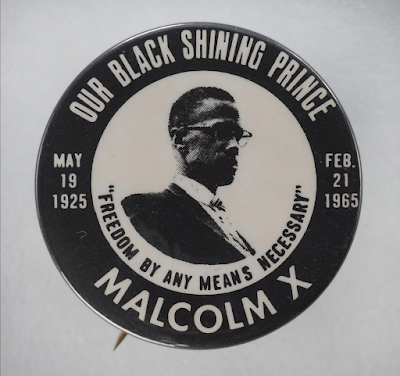
The biggest problem with this book is its size. At over 900 pages, there are a few parts that could have been edited out. While the majority of Dr. King’s work was not direct political action, it was actually organizing, planning, and fundraising, the details of every meeting he ever attended are not necessarily important. The same can be said for White House cabinet meetings. Some of the information also gets redundant, especially Branch’s mentioning of John F. Kennedy’s extramarital affairs. For example, the tryst that Kennedy had with a possible East German spy may be relevant to the discussion about his contentious relationship with J. Edgar Hoover and why he insisted that King throw Stanley Levison under the bus to placate the FBI director, but Branch goes over the details too much so that it just seems like a waste of paper after a couple paragraphs. Then there are other important parts that do not get sufficient detail. Little is said about the Constitutional Amendment and federal legislation passed under the Eisenhower administration and the emergence of the Nation of Islam along with Malcolm X are mentioned only briefly.

Taylor Branch’s Parting Of the Waters, despite its length, is an easy book to get engaged with. The subject matter is important and it can really change the way you look at American society and race relations. Even when the author preachers to those of us who already members of the choir, it is still an eye-opening narrative. The next time somebody asks about the ten books you need to read before you die, this should certainly be one of them. 


Branch, Taylor. Parting the Waters: America In the King Years 1954-63. Touchstone Books/Simon and Schuster Inc., New York/London/Toronto/Sydney/Tokyo: 1989. 


Thursday, November 25, 2021

The 1962 University of Mississippi Riots That Changed The World


The 1962 riots at the University of Mississippi campus marked a turning point for racial equality in the region. For a state that featured the confederate emblem on their state flag well into the 21st century, progress came slowly. Nevertheless, the enrollment of James H. Meredith due to clerical oversight set off a chain of events that rocked Ole Miss to its core. A showdown between President Kennedy and Mississippi Governor Ross Barnett, highlighted by a fiery call to arms before a football game, ended with two dead and hundreds injured.


Sunday, November 14, 2021

Barry Goldwater's Presidential Campaign of 1964: The Politics Of the Lowest Common Denominator


     Barry Goldwater was not a man of his times. Nor was he a man of later times, earlier times, or our present times. He was a man of no times, maybe even a man of all times. To say that he lost the American presidential election of 1964 by the biggest landslide in history because he couldn’t connect with the voters is an understatement. In more recent times, and despite this crushing defeat, political pundits have hailed Goldwater’s campaign as the beginning of the late 20th century American Conservative movement. But a careful examination of Goldwater’s values proves that back in the 1960’s, and all throughout his life, he did not share many of the core beliefs that characterize what we call today the conservative right wing. There simply must be something besides beliefs that has brought political historians to that conclusion.

Barry Goldwater was born in Phoenix, Arizona in 1909 to the son of an immigrant Polish Jew. His father owned an upscale department store called Goldwater’s and married a wealthy woman named Hattie. In order to further assimilate to American culture, the family, including Barry Jr. and his two brothers, were raised as Episcopalians. Barry, however, had little regard for religion and spent his life considering himself a secularist more than anything. In high school, Barry Goldwater was a mediocre student with a steady C average. He excelled in sports, though, and after graduation he went on to college but dropped out due to lack of interest in academic subjects. Not only did he go on to be the first and only presidential candidate to be of Jewish ancestry, he was also the only one to have never attained a college degree. His lack of intellectual prowess did not hold him back in life, though; during World War II he enlisted in the air force and got decorated as a war hero after the allied victory.

Goldwater’s political career began in 1949 when he got elected as a member to the City Counsel as part of a nonpartisan team dedicated to the eradication of gambling and prostitution in Phoenix. As a Republican, he also helped to rebuild the moribund local party apparatus. Later, he successfully ran for senator of Arizona. His election came as a surprise since his home state was a Democratic stronghold at the time. Barry Goldwater was deeply committed to desegregation and the Civil Rights Movement; he helped to set up the first NAACP chapter in Arizona and showed strong support for the Urban League.

During the 1950s, he also gave support to Joseph McCarthy and his witch hunt against Communists in American society. Goldwater’s fervid anti-Communist stance would be a hallmark of his belief system throughout his life. The fact that this stance contradicted his support for the socialist-leaning Urban League did not appear to cause any moral conflicts in his mind. Goldwater’s outspoken dislike of the New Deal Coalition established by Franklin D. Roosevelt also gained him notoriety in the Senate, especially because he criticized President Eisenhower’s economic policy as being a cheap knock-off of the New Deal. Goldwater also attacked what he called the liberal wing of the Republican party, thereby making enemies of future presidential candidates like Richard Nixon and Nelson Rockefeller who he deemed to be too far to the left to be truly American. Despite his distaste for the liberal brand of politics, he was a close personal friend of John F. Kennedy. When Goldwater told Kennedy that was planning on running against him in the 1964 presidential election, the two agreed to avoid any negative campaigning, running as two friendly rivals since they both disliked the idea of turning the American voters against one another along partisan lines.

Barry Goldwater was conservative in the sense that he valued individual freedom over the collective good. He didn’t like big government or welfare and he certainly didn’t like Communism. Such ideas are run-of-the-mill conservative strawman tropes. But Goldwater was unable to see how these beliefs smashed into a wall of obvious contradictions in light of his other beliefs. For example, the Civil Rights Movement was very much about support for the common good over the rights of the individual. Enforcing desegregation laws also requires big government interference in the lives of individuals; without a mandate at the federal level, it would be impossible to enforce integration. His ideas on crime and foreign policy also deconstruct themselves with minimal effort under examination. Goldwater claimed a strong police force with sweeping powers was necessary but this idea of a police state contradicts the idea of big government intervention. It also fails to account for how the police force and the FBI were instrumentalized by the government to oppress the African-American people he claimed to support.

Foreign policy was not one of his strong points either since he claimed to be in favor of minimal foreign intervention in conflicts overseas while being hawkish, pro-war, and supportive of military expansion. Goldwater failed to recognize that overseas wars might not effect individual freedoms on American soil but they do effect the individual freedoms of people living in foreign countries, especially when the US government interferes with elections, overthrows governments they don’t like, and installs dictators to act as puppets for the American empire. Holding the double standard that individual freedom is good for us while oppressing nations leads to a cockeyed morality and a distorted view of the world. Were Goldwater’s beliefs an intellectual sleight of mind trick meant to distract us from reality? No. Barry Goldwater, the college dropout, was a classic example of the American anti-intellectual, so deficient in critical thinking skills that he could not see his own contradictions parading themselves across his line of vision. Otherwise, though, he was a very nice man with a pleasant personality. For certain types of Americans, that is more important.

Such was the kind of baggage Goldwater would bring into the presidential election cycle of 1964. Just as the Republican Party candidates were gearing up for the primaries, a couple major events took place. One was that President John F. Kennedy, the expected candidate for the Democratic Party was assassinated in Dallas by Lee Harvey Oswald. The other was that Lyndon B. Johnson, the new sitting President, ratified the Civil Rights Act of 1964. Before the assassination, American paranoia about nuclear war and Communist infiltration was already high. The Bay of Pigs and the Cuban Missile Crisis had recently happened while the Berlin Wall was under construction. Government discussions involved plans for building fallout shelters in case of a nuclear attack. But the assassination of Kennedy took public discomfort to a whole new level as paranoid conspiracy theories began to circulate. Despite this dark shadow cast by the Red Menace, the Civil Rights Movement was the issue of the day. Jim Crow laws had been taken off the books, Freedom Riders had been beaten nearly to death by barbaric Southerners in Alabama, Malcolm X had been assassinated, and Martin Luther King Jr. was leading a non-violent movement towards racial integration, the likes of which no nation on Earth had ever seen before. As a Senator, Barry Goldwater had voted to ratify the Civil Rights Act of 1957 and the 24th Amendment to the Constitution, but in 1964, he voted against Johnson’s new Civil Rights Act. It wasn’t that Goldwater was against Civil Rights. His past involvement in the cause was nothing short of commendable. He just took issue with the bill giving the federal government more power than he thought it deserved. He was, after all, an advocate of states’ rights over federal rule. This emphasis on states’ rights sounded too much like neo-confederate ideology for the times he was living in. States’ Rights was the battle cry of the Confederacy before the Civil War began, unfortunately for the tin-eared Goldwater. These poorly thought out positions would come back to bite him later in the campaign when African-Americans showed in droves to support Johnson.

During the Republican Party presidential primaries, Nelson Rockefeller of New York started off with a strong lead. His popularity declined sharply when he announced his engagement to a woman younger than him by eighteen years. The prudent conservative base rejected him even more when it was revealed that she had recently gotten divorced and was soon in labor, giving birth to a child obviously conceived out of wedlock. Rockefeller’s momentum died out and he sank by twenty points in the polls. In the initial primary vote, Henry Cabot Lodge emerged as the front runner even though he was not officially on the ballot; he was, in fact, a write in candidate.

But Barry Goldwater continued to campaign with his message being that the Democrats and the Republicans had too many similarities. He denounced the liberal wing of the Republican party as a group of East Coast, overly-educated elites who were out of touch with the common people. He wanted to take the party further to the right and went so far as to say the entire Eastern seaboard should be cut off and separated from the rest of America. Needless to say, calling for an entire section of the country to be forced into secession, the part of the country with the highest population density and the biggest number of voters, was not a wise election strategy. Goldwater did, however, emerge as the front runner.

At the 1964 Republican National Convention, shouting matches broke out between the liberal and conservative wings of the GOP and Nelson Rockefeller got booed while making a speech. The liberals roundly denounced Goldwater but he pulled ahead in the ballots and became the clear nominee, choosing William E. Miller of New York, one of those East Coast elites, as his vice-presidential running mate.

As the election cycle of 1964 started, Lyndon B. Johnson, running with Hubert Humphries for vice-president, was riding a wave of popularity. In part this resulted from serving a term in office as vice-president under the wildly popular John F. Kennedy whose stature grew to even more enormous proportions after the assassination. Another factor of his support resulted from his recent ratification of the Civil Rights Act of 1964, although this created another problem for Johnson: he lost major amounts of sympathy from the electorate of the Deep South, previously considered a Democratic stronghold because of Roosevelt’s New Deal which lifted large portions of that population out of poverty. Another setback for Johnson was his escalation of the Vietnam War which was starting to look questionable in the eyes of a small but vocal part of the young American community. On the other hand, Johnson campaigned on the implementation of his pet projects called The Great Society and The War on Poverty which proved to be visionary in scope and were supported by an overwhelming segment of America. Democrats always do their best when they aim high.

On the contrary, Barry Goldwater had little to run on. In an age of nuclear terror, he promised to dramatically escalate the arms race, believing that an increase in the size of America’s arsenal would guarantee victory if a war were to break out. He proposed funding for the development of nuclear grade tactical weapons, like military assault rifles and hand grenades, to be carried by ordinary soldiers on the battlefield. He proposed doing away with the military bureaucracy that prevented commanding officers from issuing such weapons to foot soldiers on the ground He also proposed using executive orders to bypass Congress, enabling the President to declare war unilaterally. This small government ideologue advocated for a form of legislative overreach without realizing that Congressional approval serves the purpose of preventing any branch of government from becoming too powerful. Goldwater the Conservative argued against a conservative system of checks and balances that is necessary to prevent executive tyranny. He also proposed launching nuclear attacks against North Vietnam and the Kremlin in Moscow. At a time when people were preoccupied with preventing nuclear war, Goldwater was saying he wanted to start one.

Such thinking made Goldwater an easy target for attacks from Lyndon Johnson who accused him of being a right-wing extremist, getting most of his support from kooks and political cults like the conspiracy theory-mongering John Birch Society and the Ku Klux Klan. Support for Goldwater from the latter organization was especially curious considering Goldwater was an ethnic Jew and an advocate of desegregation but his misguided opposition to Johnson’s Civil Rights Act, and the hatred they had for the incumbent president, made them strongly support Goldwater nonetheless. Another one of Johnson’s attacks was even more harsh. He produced a television campaign ad that has come to be known as Daisy Girl. The commercial was shown only once before it got pulled off the airwaves by the networks. It showed a young girl picking petals off a daisy while counting to ten. Then a man off screen counted down from ten to one; this was followed by a nuclear explosion with two mushroom clouds. Lyndon Johnson’s voice-over explains that we need to create a world based on love where all people are safe to live. The final segment has a deep-voiced man saying “Vote for Lyndon Johnson on November 3, the stakes are too high.” The clear implication was that a Goldwater presidency would result in a nuclear holocaust.

More negative publicity came Goldwater’s way when Fact magazine published an article about the Republican contender’s mental health. It explain in detail how the make-up of his psyche was too fragile for him to handle the office of the presidency. It ended with a petition signed by more than 1000 psychiatrists who claimed that Barry Goldwater was psychologically unfit for political office. Goldwater’s performance during debates, interviews, and Q and A sessions did not lend him any credibility. His speaking was evasive, characterized by empty sloganeering and circular logic that made him appear as if he didn’t know what he was talking about. His belief that the government was secretly hiding UFOs further cemented his image as a flaky nutcase. Lyndon Johnson, while not especially attractive, was an eloquent and highly-skilled speaker who could talk circles around Goldwater without much effort.

Worse than all this was the fact that Barry Goldwater could never extend his popularity beyond his own miniscule base of conservative Republicans. Liberal and moderate Republicans all flocked to the Democratic side in support of Johnson. Goldwater’s narrow messaging never connected with anybody in the opposing political party and it certainly drove independents farther to the left.

Goldwater did attract the attention of a politician whose star was rising and would prove to be more influential in the future. Ronald Reagan at that time was a barely known actor, making corny unwatchable B-movies like Bedtime for Bonzo in which he fed a chimpanzee. His wife too was a complete airhead named Nancy whose biggest role was in a science-fiction film called Donovan’s Brain. Somehow it slid by the censors during the McCarthy era when leftist themes were less tolerated. Ironically the film was about a corrupt, power-hungry businessman who gets brought back to life. While the film is not explicitly pro-Communist, it certainly does have an anti-capitalist message to it. Reagan’s greatest political asset at that time was that he was the President of the Actor’s Guild, another irony since Goldwater was against labor unions. He saw his opportunity to transition from Hollywood to Sacramento to Washington, D.C. and jumped on Goldwater’s tiny, shrinking bandwagon. The future President made one campaign speech praising Goldwater’s shallow ideology. Two years later, Ronald Reagan would get elected governor of California and then go on to be elected President in 1980, defeating Jimmy Carter.

Come election day, Lyndon Johnson slaughtered Barry Goldwater in the polls. He broke voting records on two counts. With 486 electoral votes to Goldwater’s 52, Johnson took the highest number of electoral college votes in history, a record only to be surpassed by Ronald Reagan in 1980. Johnson also received 61% of the popular vote, a number that has never been surpassed by any candidate yet. President Lyndon Johnson defeated Barry Goldwater with the biggest landslide victory in the history of American elections. The only states taken by Barry Goldwater in the electoral college were his home state of Arizona, which he barely won, and the Deep South states of Louisiana, Alabama, Mississippi, Georgia, and South Carolina. These Dixiecrat states went red largely in opposition to the Civil Rights Movement. Once again, the Confederacy was on the wrong side of history. It probably won’t be the last time either.

The election of 1964 represented a major turning point in American politics. Not only did it launch the governmental career of Ronald Reagan but it also turned the once Democratic South towards the conservative Republican Party. It also marked a shift in the voting preferences of African-American people who were traditionally supporters of Abraham Lincoln’s Republicans and have been predominantly supporters of the more inclusive Democratic Party ever since.

Although Barry Goldwater lost miserably, political scientists see his campaign as the start of the modern Conservative movement in America. In some ways he is an odd choice for such a dubious honor. The conservative public intellectual William F. Buckley Jr., after the bloodletting campaign of 1964 ended, commented that Goldwater made Conservatives look like a bunch of simpletons. In any case, he unwittingly hit on a painful truth. Most likely it was not what Barry Goldwater believed in or said that made him the forefather of Reagan-era right-wing politics, it was his approach that did it. Goldwater, the college dropout and anti-intellectual, once said that the American people were not complicated and appreciated simplicity more than anything. Goldwater, the clean-cut, pleasant sounding man fit this role perfectly. He communicated his message with ease, without parsing over and fine details or potential flaws. He appealed to those who work hard and think little, the low-information voters. He dragged political debate down to the lowest common denominator, a tactic that Fox News, with their bullying and infantile temper tantrums, have been running with for the last twenty years.

The historian and political sociologist Richard Hofstadter may have been the first to draw a connection between Barry Goldwater and the kind of people he inspired. In his landmark book of essays called The Paranoid Style in American Politics, he connected Goldwater to a certain class of conservative Americans. These are white, middle class people with low levels of education. They are suspicious of government while being loudmouthed about their patriotism and loyalty to their country. They know little about policy or economics, dislike foreign intervention but strongly support any war America wages. They believe in individual freedom but despise anyone, be they freaks, hippies, pacifists, homosexuals, or punks, who expresses their individual liberty in ways that are different from their own. Prone to conspiracy theories, they often think the establishment has fallen from grace, being infiltrated by foreign agents like Communists, Jews, Catholics, the Illuminati, Freemasons, immigrants, and the United Nations. Millenarian in their thinking, they believe society is on the verge of collapse at all times. These thought patterns are common among the Calvinist and Evangelical Christian belief systems, with deep roots in the Puritan sect that arrived in America so many years ago. These are the people who Ronald Reagan rallied in the 1980s and have since degenerated into a mean-spirited form of hatred, narrow-mindedness, and nationalism inspired by the likes of Newt Gingrich and Rush Limbaugh, culminating in the dystopian rise of reactionary ignoramuses like Sarah Palin and the quasi-fascism of Donald Trump. These are the people who became post-Goldwater Conservatives.

Such a legacy may not be entirely fair to Barry Goldwater. If he were alive today, he would be horrified by what the Republican Party has become. During the 1970s he took a break from politics and re-emerged once again as a Senator. While he expressed some admiration for Reagan, he was not entirely happy with what Conservatism was. He was critical of Reagan’s interventions in Central America and condemned the sale of arms to Iran in order to illegally fund a right-wing dictatorship in Nicaragua in what came to be known as the Iran-Contra Affair. Being an advocate of marijuana legalization, he dislike the disastrous War on Drugs. He also disliked the Religious Right, believing them to be a pseudo-totalitarian form of surrogate big government. Goldwater said that Jerry Falwell deserved to be kicked in the balls and complained that Pat Robertson was little more than a charlatan, a petty conman, and a grifter. He was a staunch advocate of environmental protection and believed heavy taxation on big industries would force them to reduce carbon admissions on their own at the source of production. He advocated for gay and lesbian rights along while being a supporter of gay marriage. He was pro-choice, believing a ban on abortion constituted government interference in a woman’s right to control over her own body. These are an incredibly liberal set of beliefs coming from a guy who is thought of as the godfather of the Conservative movement. In fact, Goldwater was once known to have said that most liberals are actually fine people with outstanding moral standards. All these contradictions go right over the heads of low-information Conservatives with their love of simplicity, lack of curiosity, and anti-intellectualism that prevents them from seeing the obvious.

If Barry Goldwater can represent anything definite in our times, he can act as a symbol of futility, the dysfunctionality of pigeonholing people into categories of belief. As a right wing Conservative, his ideology does not hold up well under scrutiny. As a Liberal, he doesn’t do any better. Realistically, today he would be a blend of Ron Paul and Bernie Sanders, more likely an Independent than a Republican or Democrat. If he hadn’t died, he might exemplify the virtue of maintaining a voice independent of the hostile tribal partisanship that is crippling American politics. But then again, maybe not. His method of polite delivery and shallow reasoning might make him sufficiently non-committal to any party but being in such a central position might only result in his being shot at from all sides at once.


Thursday, October 28, 2021

Highlander Folk School


When people think of the civil rights movement, they often think of Selma or Montgomery, Ala., Atlanta or Memphis.

Maybe they should think of Grundy County, Tenn.

After all, it was at the Highlander Folk School in Grundy County that early civil rights strategy was mapped out. At Highlander, white and black activists — including Martin Luther King Jr. and Rosa Parks — met in the 1950s to talk about how they might change the South. It was at Highlander that many civil rights leaders trained

Read the full article on The Tennessee Magazine


Saturday, October 9, 2021

Apocalypse Postponed: The Cuban Missile Crisis


     The American military’s nuclear weapons program was progressing rapidly. Officials were wondering what to do with their stockpile of obsolete missiles. It was at the end of the 1950s, Dwight D. Eisenhower was the American president, and the Cold War was about to take a new turn. The American military already had nuclear warheads in West Germany, Italy, and Japan, aimed and ready to fire at the USSR. One more base would make their nuclear supremacy more complete. Their obsolete missiles were offered to Turkey along with NATO membership. For the world’s most secular and modern Islamic nation, this offer was a welcome invitation to take a step up in respectability. The Turks accepted the offer with pride. The missiles were installed along the north coast, aimed at Ukraine, then a part of the USSR, ready to strike the Eurasian superpower within less than thirty minutes at any given time.

Meanwhile in the Caribbean Sea, Fidel Castro was sailing a leaky boat called Granma through a hurricane, from the shore of Mexico to the southern coast of Cuba. Along with Che Guevara and a small crew of ragged guerillas, they arrived and overthrew the American-sponsored dictator of Cuba, Fulgencio Batista with widespread support from the rural peasantry, underfed, undernourished, and under-educated by the capitalist pigs who ran their country. Initially the non-alligned Castro had no political ideology; he only sought power. He solicited support from both America and the Soviet Union and the Soviets offered to keep him in power permanently while the Americans pushed him to hold elections and preserve Cuba’s democracy. Castro chose to take sides with the former and Cuba became a communist dictatorship.

Due to longstanding treaty obligations, the American military was forbidden under international law to invade Cuba; instead they set up a clandestine operation under the newly sworn-in president John F. Kennedy. Exiled Cuban troops in southern Florida were recruited and trained for the Bay of Pigs, an exile invasion meant to overthrow the Castro regime and reclaim Cuba as an ally of the USA. The invasion was a miserable failure. Adding fuel to this fire was another clandestine conspiracy called Operation Mongoose. Headed by the president’s younger brother Robert Kennedy, acting in concert with the CLIA, the plan was to either assassinate Fidel Castro or start a rebellion against him. When looking at their schemes, one might conclude that the scriptwriter for The Three Stooges was orchestrating the events. These actions involved hiring mafia hitmen, sneaking chemicals into Castro’s drinking water that would make his beard fall off, passing him exploding cigars, and spiking his drink with LSD before a speech so that he would ramble on nonsensically in public. After Castro had given a nine hour, fully improvised speech at the United Nations while attendees either fell asleep or left the hall, you might wonder why they thought such a sabotage operation would be necessary or even effective. . The strangest plan in Operation Mongoose consisted of having airplanes drop leaflets all over Cuba announcing, in Spanish, the second coming of Jesus Christ.

In any case, the serious-minded Fidel Castro did not like these shenanigans. He wanted to get on with the business of building Cuba up as a modern, prosperous, and independent nation.

Overseas in Moscow, Nikita Khrushchev saw this situation as an opportunity to make the USSR more powerful on the world stage. America was winning the nuclear arms race with better weaponry in greater quantity, much of which was loaded and ready to fire on the Russians within a moment’s notice. The imbalance of power was unmistakable. He hatched a plot to secretly deploy Soviet nuclear missiles to Cuba. This would even things out between the two fledgling empires in their respective hemispheres.. It would also give the communists a foothold from which they could spread further into Latin America. Khrushchev also had ambitions for incorporating West Berlin into East Berlin, joining the city once again, extending the Soviet reach into Europe; their missiles in the Caribbean could be a good bargaining chip in this endeavor. At first, Castro hesitated to accept Khrushchev’s offer; the last thing he wanted was a nuclear war with America. But as the CIA continued to try wrecking Cuba’s economy, he gave in to the pressure and soon a fleet of Soviet submarines was making its way across the Atlantic Ocean.

When the submarines reached their Caribbean harbors, Cuban revolutionaries and Soviet soldiers worked together unloading the freight. At first the Soviet grunts were surprised to see brown skinned Latinos and Afro-Caribbeans speaking Spanish; in an effort to maintain absolute secrecy, the Soviet commanders told them they were being mobilized in the Arctic circle. They also did not know what they were transporting until they began to unpack the cargo. There they found nuclear warheads and equipment for building missile launchers.

Aerial photography from U-2 spy planes flying over the island captured images of unusual activity. Storage bunkers, looking like airplane hangars, were being built in palm groves meant to conceal what they contained. These were brought to the attention of John F. Kennedy who was not overly concerned until a spy on the ground in Cuba reported seeing trucks driving through the rural, muddy towns in the middle of the night. Their beds were unusually long and covered with military grade canvas. The objects being transported were too long to be logs and were, in fact, so long that the drivers had to maneuver inch by inch, centimeter by centimeter, to navigate the narrow roads between buldings. The weight of the trucks were enough to get the wheels stuck in mud and considerable effort had to be made to get them up the steep hillsides.

After more U-2 spy plane missions and close inspection of the photographic findings, the CIA concluded that nuclear missiles were being installed in Cuba. What the photos revealed were a buildup of surface-to-surface and surface-to-air rockets with nuclear warheads in the process of assembly, mostly in Pinar del Rio. The crudely built launching systems were powerful enough to send missiles as far as Miami and Washington D.C.

On October 20, John F. Kennedy called a meeting with EXCOMM, the Executive Committee of the National Security Council. Present were Robert Kennedy, Lyndon Johnson, McGeorge Bundy, Robert McNamara, and CIA director John McCone among others. They discussed plans including: doing nothing, diplomacy, air strikes, invasion, and a naval blockade. After some deliberation, the men of EXCOMM were mostly in favor of invading Cuba but the longer-term outcome was not so good. Aside from having the capability of a retaliatory nuclear strike on American soil, the Soviets also had the capability of dropping nuclear bombs on US allies in Europe and Asia. If China got involved, the outcome could be even worse. A nuclear war would, at best, kill off one-third of the world’s population and, at worst, lead to Mutually Assured Destruction, a situation that would rended the entire planet uninhabitable by humans. EXCOMM decided they had better move with more caution. In the end, they decided an initial blockade was the best option with diplomacy as being a back-up plan.

The American government was quickly offered assistance, both practical and logistical, from other nations in the region, Mexico, Venezuela, Colombia, and Trinidad and Tobago all offered naval vessels and assistance with intelligence if needed. America moved a navy ship to the border where the Caribbean Sea becomes the Atlantic Ocean. Military bases all across the American continent were put on high alert in case of attack or invasion. ICBM’s were prepped and aimed at Cuba. Anti-missile defense systems were set to blow-up any incoming nuclear bombs. Air force squadrons were mobilized to the Southeast. Overseas military bases were gotten ready for retaliatory attacks against the Soviet Union in case of a strike in the USA or any of its NATO allies.

On the afternoon of October 22, President Kennedy went on television and announced to the world that Cuba had a stockpile of nuclear weapons that were capable of reaching American soil. He announced his strategy of quarantining Cuba to prevent any further buildup of war materials, also assuring that supplies of food and medicine would be allowed through. He ended the speech on an ominous note by stating that America was ready to fight back militarily against either Cuba or the Soviet Union if any threats were made. The response from governments around the world was largely favorable to the USA but China said they were ready and willing to enter combat if a war were to break out. From the Vatican, Pope John Paul XXIII pleaded for peace and a solution to the problem through negotiation.

Nikita Khrushchev reacted to Kennedy’s speech with calm. After advising the whole world not to panic, he did, however, deliver a telegram to Kennedy, accusing America of aggression, stating that the blockade was an act of war. He explained that Cuba’s missiles were for defensive purposes only and warned that nothing bad would happen if America just stayed away. Khrushchev’s words were deliberately vague, so Kennedy and his cabinet were not sure how to take his statement at first.

On October 25, an unflagged tanker was spotted heading towards Cuba. Officials concluded it was likely from either Romania or the USSR. After chasing and stopping it, the American navy let it go through, concluding that it contained nothing of military significance.

The next morning, when EXCOMM met with Kennedy, they pressured him to either launch air strikes against Cuba or launch an invasion. The Soviets had shown no signs of backing down at this point. The hawks were getting too eager for war and Kennedy, along with Vice-President Johnson and his brother Bobby, were going over to the dove side. Kennedy had secretly sent an ABC journalist named John Scali to meet with a Russian agent named Aleksandr Fomin. They liaised in a hotel coffee shop late at night and floated the possibility of the withdrawal of Soviet missiles from Cuba in exchange for an American promise not to invade the island nation.

Fidel Castro believed an air raid against Cuba was imminent. During a spontaneous rally in Havana, he made a speech telling his people that war was about to begin. He assured them that Soviet missiles were ready to be used when the attack came. When the uniformed Soviet soldiers were paraded through the streets, Cubans sang, danced, and chanted, praising them as liberators, heroes, and an army of messiahs brought there to fight off the American imperialists. With bottles of potent rum and vodka, the party went on all night. Shots of liquor were exchanged while language lessons in Spanish and Russian were traded and a whole breed of Slavic-Caribbean mulattoes were conceived in the early hours of the humid morning.

Events reached their maximum peak on October 27. Over the radio, Khrushchev addressed his nation, announcing that he was offering to withdraw the nuclear missiles from Cuba if America withdrew theirs from Turkey. The Turks were livid, swearing they would never give up their bombs, and the Americans were shocked since this went against the secret negotiations that were made just days before.

While the Americans were scrambling to decide how to react to this turn, a new Soviet tanker was spotted crossing the Atlantic. The military did not even know about the fleet of submarines that were heading in the same direction. Even worse, an American U-2 spy plane was shot down by the Cuban military with the order having been given by Raul Castro, Fidel’s younger brother and commander of the Cuban armed forces. The American pilot died in the crash.

In response, the Americans announced they would soon be launching an all-out bombardment of Cuba in an air raid and a full-scale invasion by sea. The Castro brothers escalated their threat to bomb America. Soviet diplomats immediately contacted the American government. Russian generals immediately contacted their agents in Cuba. Khrushchev decided Fidel Castro was too hot-headed and tempestuous to have any control over Soviet weaponry, so he mandated that only Soviet officers were allowed to have any access at all to the missile launching technology. After passing this information on to the Americans, Kennedy agreed to a temporary halt of any military activities. The invasion was called off for as long as the Soviets agreed not to open fire on America. Later that day, the commanding officer of the Soviet tanker heading towards the Caribbean Sea got scared, disobeyed direct orders, turned the ship around, and went back in the direction of the USSR.

President Kennedy and Nikita Khrushchev then made direct contact with each other. Negotiations were quick. The USSR would withdraw all their missiles from Cuba. America would withdraw their missiles from Italy and Turkey along with a publicly declared promise not the invade Cuba and leave them free to conduct their internal governmental affairs without any interference from the US government. The Italians were more than happy to comply while the Turks felt cheated. They were, however, allowed to remain a member state of NATO.

Everybody was more or less happy, except maybe the Cubans. Fidel Castro woke up and turned on his radio to listen to the news being broadcast from Miami. When he heard about the deal negotiated between Khrushchev and Kennedy, he flew into a rage and punched the mirror in his bedroom; his screams could be heard at a long distance. The Soviets had snubbed him. Without even consulting him, they conducted diplomacy with the enemy behind his back and never even contacted him to give him the latest developments. Relations between Cuba and the USSR grew frigid from then on.

A couple days later, an American warship using sonar detectors located an approaching submarine. It was a Soviet U-boat carrying a nuclear torpedo. The crew had been submerged for too long and the submarine was running out of oxygen. When the American navy commanded them to surface, they had no choice other than committing collective suicide. When they reached the top of the ocean, they were greeted with American guns pointed right at them. If the Americans had fired, the Soviets would have launched the torpedo, an obvious act of aggression. US-Soviet negotiations would have been worthless then and World War III, along with a nuclear holocaust would have begun. The Soviet submariners made haste to surrender and nothing happened. Later that evening, the Americans invited the Soviets on board their ship for dinner and a party. The Russian sailors declined but they gathered on top of their U-boat while the American military band played jazz for them to hear. Friendly greetings and toasts of hard liquor were shared across the waters before the Soviets went back home.

Nikita Khrushchev was stripped of his position by the Russian Politburo two years after the end of the Cuban Missile Crisis. Soviet officials decided it made him look weak, even when the whole world felt relieved with the retraction of the threat of nuclear war. Relations between the American and Soviet governments remained lukewarm but cordial in the aftermath. The now-famous Red Phones were set up so that leaders of both nations could contact one another directly, though insiders say they were mostly used to have casual conversations about sports and the weather rather than politics. Relations between America and Cuba have continued to stagnate, even though Cuba no longer poses a threat to anybody anywhere.

The Cold War had heated up then cooled off again, taking a strange turn after America and Russia agreed not to bomb each other. Both sides continued to escalate the arms race, working hard to build the biggest possible nuclear arsenal in an absurd attempt at deterrence. Considering that both countries ended up with enough nuclear bombs to destroy the entire world a hundred times over, possibly even more than that, one has to wonder about the sanity and rationality of the leaders at the tops of the world’s most powerful nations. They seem to be no different than cavemen arguing over who has the biggest club but with far deadlier consequences.

In the end, only one of the three national leaders in the Cuban Missile Crisis outlived the Cold War. Fidel Castro stepped down in 2006 and handed the presidency of Cuba over to his brother Raul; he died of old age ten years later. In the last years of hus life he still insisted on wearing his military uniform at all times of the day, even when eating his breakfast.


Tuesday, September 7, 2021

Tread


documentary film about Marvin Heemeyer, 

a man who built a killdozer and destroyed a town

directed by Paul Solet

(2000)


Monday, August 30, 2021

Just Because You're Paranoid It Doesn't Mean They Aren't Out to Get You: The Life of Wilhelm Reich


     Young Willi, twelve years old, was peeing through a keyhole. What he saw was his mother, in bed with his tutor, having sex. He wondered whether he should tell his father about this and after long deliberation, he finally did. The father later caught his wife, again indulging in the act, and beat her severely. Willy’s tutor was fired and sent away. His mother, feeling humiliated, committed suicide soon after. His father sank into a deep depression and, one day during the winter, went swimming in an extremely cold pond. The man later died and Willy believed he took that swim in order to make himself sick as a means of committing suicide. Whether that is true or not meant nothing to the boy because, in his adolescent mind, that is what his father did and that is why he did it.

The young boy Willy was Wilhelm Reich, the Austrian psychoanalyst who went on to have a controversial career. He grew up with his brother in a non-practicing Jewish family in Bukovina, a part of the Austro-Hungarian Empire at the time and now straddling the border between Romania and Ukraine. The Reichs were wealthy landowners and lived on an agricultural estate. Wilhelm Reich later claimed he lost his virginity at the age of twelve with an older servant woman who lived and worked on the property. He also claimed that he remembered other servants fondling his genitals as early as four years old. Other confessions he made were that, as a child, he enjoyed watching farm animals rutting and he once masturbated while sticking a broom handle inside a horse’s vagina. At the age of fifteen he began frequenting whorehouses, a habit that lasted long into adulthood. People that knew him in later years claimed that his preoccupation with sexuality was the result of childhood abuse.

When the Russians invaded Bukovina, the family property was seized; Wilhelm and his brother lost their inheritance and later went off to fight in World War I. Afterwards, the two brothers were reduced to poverty, sharing a one-room unheated apartment with Wilhelm’s girlfriend while he studied at the University of Vienna. The brother died of tuberculosis. The girlfriend also died of sepsis. He claimed that she got sick from living without heat during the harsh Austrian winter but a cleaning woman found bloody rags and underwear among her possessions and the mother accused Reich of infecting her during a botched abortion. The girl’s mother went crazy and committed suicide.

In 1919, at the age of 22, Wilhelm Reich made the acquaintance of Sigmund Freud. The two men were neighbors and struck up some conversations about psychoanalysis. They took an immediate liking to each other and Reich requested a reading list to help him get more acquainted with the subject. Freud invited him to attend meetings at the Viennese Psychoanalytic Association. Soon after, Wilhelm Reich began undergoing psychoanalysis and analyzing his own patients. Reich’s first analysand was Annie Pink. The two fell in love and, at Freud’s instigation ended therapy when the relationship began. After a year or so of switching between romance and analysis, the pair got married. Reich graduated with an MD in 1922 and immediately went into medical practice, working in a neurology hospital called the Viennese Ambulatorium. It was there that he took an interest in patients suffering from psychosis and schizophrenia. Up until this point, Reich had been uncomfortable with the mechanistic interpretation of the human body’s workings; he turned to psychiatry as a means of understanding the connection between body and mind.

Over the next few years, he observed his patients carefully. Since the clinic was free, they were mostly laborers, farmers, factory workers, ex-soldiers, and other members of the working class. Many of them suffered from shell shock or what we call post-traumatic stress disorder nowadays. Reich saw patterns in their thinking and behavior that would later manifest in his theories.

Meanwhile, Reich rose in the ranks of professionalism and joined the Viennese Psychiatric Institute where they gave him a prominent position as director of training. His weekly seminars grew in popularity since he was a charismatic and spellbinding speaker. Moreover, his lectures presented a fresh new approach to psychoanalytic theory and practice. He had noticed that patients suffering from psychiatric disorders often displayed distinctly different body language and posture than people not overcome with neuroses. Another observation that he made was that nervous disorders manifested in complexes, obsessions, delusions, and hallucinations in ways that prevented the free flow of libido throughout the human psyche. He believed these manifestations were caused by trauma suffered during childhood or adolescence. The physical rigidity of neurotics was also caused, Reich believed, by blocked sexual energy that was unable to flow freely throughout the body. He called this the theory of “character armor” and he wrote it out in his first book titled Character Analysis. This theory was in line with, and an expansion on, Freud’s theory of the ego.

Wilhelm Reich’s career was on the move. At Sigmund Freud’s insistence, he was formally accepted as a member of the Viennese Psychoanalytic Association. Unfortunately, he was met with cold shoulders from the older, established psychiatrists. Partially this was a case of new-baby-in-the-crib syndrome since the jealous elder siblings in Papa Freud’s family did not appreciate the attention that the upstart analyst was getting. Even more controversially, Wilhelm Reich had begun to become active in politics. While attending a labor union demonstration with his wife Annie, the angry crowd became untruly and the police showed up with rifles, started firing into the crowd, and killing several hundred people. Wilhelm and Annie escaped to safety but what they saw infuriated them so much that they joined both the Social Democrats and the Communist Party of Austria. This made the Psychoanalytic Association uncomfortable because they were trying to maintain a strictly apolitical stance. And what Reich got involved in next was pushing the boundaries a little too far.

Reich became radicalized, seeing the state as an agent of repression for the masses. Politics, economics, and the industrialized society were all functioning to prevent the free movement of the laboring classes. At the heart of it all, the farmers and factory workers were too poor, too exhausted, and too hungry to fully express themselves sexually. LIke their own libidinal energies, the masses were blocked and restricted. Therefore, Reich believed that healthy sexual expression was the means to overthrowing the established order. When the masses were sexually liberated, they would be politically liberated as well. Reich coined the term “sex-pol” to signify his brand of sexual politics. He would later develop these theories and publish them in his books The Sexual Revolution and The Mass Psychology of Fascism.

Reich was no armchair psychologist, though. He believed in action. With his wife Annie, he set up three free walk-in clinics catering to adolescents who needed counseling in sexual matters. They were staffed by volunteers, each one having physicians, nurses, gynecologists, and therapists on hand for assistance. Reich himself also drove around in a temporary clinic, a van stocked with medical supplies, which he used to spread the word throughout Vienna. These clinics gave courses on contraceptives and reproductive health, treated people for STDs, held therapy sessions for victims of abuse, and fitted women with IUDs. In the 1920s, Reich was an early and fearless advocate for sex education, gender equality, and abortion rights.

Reich became more and more confident in his theorizing. He developed his theory of “orgastic potency”, claiming the goal of psychoanalysis should be a state where all libidinal energies were freed from repression along with its accompanying rigid bodily armor. This would be an achievement where an orgasm led to a full-body expression of release, one where the ego dissolved and the ecstasy of pure energy was experienced. Sounding like a practitioner of tantra or kundalini yoga, Reich had crossed the line from psychoanalysis into pure mysticism. His ideas were written out in his book The Function Of the Orgasm. He dedicated his latest work to Sigmund Freud but the psychiatric pioneer greeted it with a lukewarm reception. The elder psychoanalysts were even less impressed. Reich’s own therapist began whispering to the others that Reich was psychotic. Some took this as more of an insult than a diagnosis of a pathology but there were others who began to wonder if it should be taken at face value.

Feeling the heat from all those around him, Wilhelm and Annie moved to Berlin, just as Adolf Hitler was beginning to stir up trouble. Upon their arrival, the two of them attended a Communist Party demonstration that turned into a street brawl with Nazi brownshirts. With a bloodied face, Reich went with his comrades to their meeting hall. While everyone was in a state of agitation and ready to fight, a party official came out and gave a lecture on economics. Most of the crowd got bored and left. Reich then realized why the working classes were mostly flocking to the Nazis, with all their passion and fury, and not to the Communists.

In Berlin, Wilhelm Reich was too hot to handle. The Berlin Psychoanalytic Association allowed him to attend a conference and give a lecture on orgastic potency but they refused to admit him as a member. The predominantly Jewish association was receiving unwanted scrutiny from the Nazis and his membership in the Communist Party made them a bigger lightning rod for controversy then they cared to be. The Social Democrats also asked him to leave because of his association with communism. They were trying to appeal to the working class Catholic population and promoting themselves as a conservative form of socialism. The German Communist Party also kicked Reich out because they thought his sexual politics were too much of a distraction to their single-minded message of economic equality and revolution.

Meanwhile, Wilhelm Reich had been having several affairs behind his wife’s back. The two divorced in 1933, the same year Hitler became chancellor of Germany. He immediately hooked up with a young dancer named Elsa Lindenberg. Then the Nazi press published an op ed attacking Reich’s book The Mass Psychology of Fascism. After an intimidating interrogation from the German police, Reich was warned by an acquaintance that they were planning to arrest him so he fled with his new lover to Denmark. During his time in Copenhagen, Reich was outspoken about legalizing abortion so when his visa expired, he had to leave. Next, the couple settled in Malmo, Sweden.

Wilhelm and Elsa rented a room in a cheap hotel. To make ends meet, he gave psychotherapy sessions in their residence. Despite all his detractors, Reich at that time was considered to be an expert, top quality analyst. But the other hotel guests and the authorities were suspicious. The constant coming and going of single men to their room looked strange so the police began monitoring the couple’s activities. Word had also gotten around that he had started a new type of treatment called “vegetotherapy”, a technique where Reich would find rigid muscles and press his fingers into them to release what he believed to be blocked up energy. The police concluded that Reich was pimping his wife, arrested them on charges of prostitution, and made them leave the country. From there they went to Oslo, Norway where things continued to get worse.

As Reich and Lindenberg settled into their new Scandinavian home and final residency in Europe, the doctor had grown wary of politics while psychiatry had also become too routine for his restless mind. The science of biology turned into his newest fascination, particularly the question of what role sexuality played in the mind/body connection. He started a new cycle of experiments in which he attached electrodes to people’s bodies to measure the levels of electrical discharge during the differing stages of sexual arousal and performance. He started by having a man masturbate with electrodes on his genitals and then progresses to having couples go through the motions of making love with electrodes attached to their erogenous zones and heads. Reich successfully measured an increase in electrical stimulation leading up to orgasm and a sharp decline afterwards. Considering this was two decades before Alfred Kinsey established sexology as a legitimate science, this was revolutionary for its time.

But the wider scientific community was not impressed. Psychiatrists, physicians, and biologists in sexually conservative Protestant Norway were worried that Reich was merely some kind of pervert, using science as an excuse to indulge in abnormal behaviors. Even worse, they were worried about their own reputations being ruined through guilt by association.

In his research, Reich had measured electrical peaks and troughs but he felt as if something was missing; there must be some kind of energy flowing, through the body that accumulates and gets released during orgasm. His unanswered question took him deeper into experimental biology. In his laboratory, he examined protozoa and became determined to learn what happened when they grew vesicles. His equipment proved to be inadequate for this task, so using his own ingenuity, he developed a high-powered miscroscope. This presented another problems because the period of growth took to long for him to observe alone so he began tinkering again and designed a camera that used time-lapsed microcinematography to show him what he wanted to see. He made a compound of grass, sand, iron, and animal flesh then heated it to incandescence. After placing this in a cooling tank, the vesicles grew and along with them he saw microscopic rods that were blue, which he called PA-bions, and red, which he called T-bacilli. He drew the hypothesis that these bions were in a transitional state between inorganic matter and organic life, possibly even containing the energy that flows throughout the body and gets blocked in some places because of trauma and neuroses.

In another avenue of research, Reich obtained tissue samples from cancerous growths. According to his notes, these tissues had an abundance of T-bacilli. He cultivated more bions and injected T-bacilli into mice, discovering that they often developed cancer as a result. When he injected PA-bions into mice with tumors, the cancer appeared to recede. He concluded that blue bions were a type of life-force and red bions were a type of death-force. When the blue bions grew old, weak, or got injured, the red bions took over and cancer resulted. In more recent times, two scientists have been able to replicate these experiments obtaining the same results.

In 1937, the Norwegian media began a smear campaign against Wilhelm Reich. After two prominent bacteriologists examined Reichs bions, they claimed they were nothing more than staphylococci that had been present in the air. Reich objected, with tangible proof, that his solutions were sterilized before beginning his tests but this objection fell on deaf ears. They simple denied that this was possible and refused to investigate any further into the matter.

The scientists immediately contacted the press and the newspapers began running daily stories about how Wilhelm Reich was an ignorant quack who should not be practicing science. More than 150 articles were published consecutively over several months. It was the biggest news story in Norway for the entire year. Later research showed that the scientific community as a whole wanted Reich to be expelled from Norway because of his politics and interest in sex. Their efforts paid off because when Reich’s visa expired, the government refused to renew it on the grounds that he was a troublemaker. The government’s knowledge of him came soley from the proliferation of media reports. Reich’s reputation had been tarnished so he packed up and left for America just as the Nazis were beginning to conquer Western Europe. Before his departure, his girlfriend broke up with him. Reich sailed to New York on the same ship that brought Salvador Dali to the U.S.A., another famous man fleeing from the approaching war. Dali himself had been treated unfairly by the Surrealist art movement who accused him of sympathizing with fascism when he painted a portrait of Hitler. Reich and Dali met during the voyage but neither man made a strong impression on one another.

Upon arrival at Ellis Island, Reich immediately fell in love with New York City. The tall buildings and vibrant street life were impressive. He felt as if he could finally devote his life to his research in freedom, without any interference from the media or the authorities. He took up residence in Queens and immediately began teaching classes on the biological foundations of psychiatry at the fledgling New School for Social Research. During this time, Reich started a relationship with a much younger woman named Ilsa Ollendorf. She also worked as his private secretary since she had a talent for organizing his life. Soon she was pregnant and gave birth to Reich’s son Peter.

At his home in Queens, Wilhelm Reich continued doing research with bions, injecting laboratory mice with cancer-causing cells and observing them in a Faraday cage. One day, he went out into his back yard and stared into the sky. He believed he saw streaks of blue against the ordinary light blue that the sky usually is. Believing he had discovered something unusual, he built his own telescope, later dubbed an “organoscope” and brought it out again at night. Using it to look in spaces between stars, he perceived streaks of blue there also. With such flimsy evidence and a massive leap of logic, he decided this substance was the primordial essence of all life, the energy from which all that exists is built. He also believed this to be the blue-colored PA-bions he had discovered in Oslo as well as the psychic-sexual energy, known as the libido, that flows throughout the mind and body, being released during orgasm. He named his new discovery “orgone” and set out to explore this substance, giving his life a whole new purpose.

One day, Reich heard knocks on his door. He opened it to find the police with a warrant for his arrest. Without any trial, or even an explanation, the scientist was taken to jail. After searching his home, the authorities questioned why he had books like Hitler’s Mein Kampf and The Communist Manifesto by Marx and Engels in his personal library. They wanted to know if he had any subversive intentions. Reich explained that, as a psychiatrist, understanding these works was necessary for finding a solution to the problems of tyranny and totalitarianism. You can’t cure an illness if you don’t understand how it works. The distress of this meeting caused Reich to break out with psoriasis so he was moved to a cell in solitary confinement. Soon after he was released without any explanation as to why the police were watching him.

In 1942, Reich purchased an abandoned farm in Dodge Pond, Maine. He called it Orgonon and used it as a research laboratory for the development of his scientific research into orgone.He called his new branch of science “orgonomy”. At first, he spent only his summers there, immersed in his work. Despite the dubious nature of his claims, he attracted the attention of well-connected scientists in the fields of medicine, psychology, physics, and biology who came to work at Orgonon. Many of them came from Ivy League universities. They developed into a thriving community. It was here that Wilhelm Reich’s paranoia manifested more visibly. One day when a teenager accidentally wandered onto Orgonon property, he was met with Reich pointing a shotgun at him. He was told to leave and he did. Reich did not feel safe.

At Organon, Reich invented a new type of Faraday cage. It started out as a small metal box with organic, plant-based materials attached to the outside, meant to attract orgone from the atmosphere while the metal was meant to trap, concentrate, and intensify it. These orgone accumulators were at first small boxes with windows in which cancerous mice were placed and exposed to orgone radiation. Reich found that, although these mice eventually died they did live longer than cancerous mice who were not placed inside orgone accumulators.

Reich believed he had made a major medical breakthrough that could also have wide-ranging significance outside the field of medicine. He contacted none other than Albert Einstein who invited Reich to his home in Boston for a meeting. The two spent an entire day in discussion and Einstein agreed to meet Reich the next day in the laboratory. Reich showed up with a small accumulator and demonstrated with thermometers how the air inside the closed box was .01 degree warmer than the air outside of it. Einstein did not believe such a thing was possible but he could clearly see the evidence when looking through the window at the thermometer inside the orgone accumulator. He asked Reich if he could take the device and experiment with it in private. The younger scientists obliged and went back to Organon. Einstein, during the course of his experimentation, moved the thermometer outside the accumulator to various parts of the room and soon found that the temperature varied depending on where it was placed. He concluded that gradients in air currents around the room altered the measured temperature slightly. A letter was written describing his findings and he sent it to Reich who was devastated. In protest, Reich made more attempts to contact Einstein but the famous physicist decided not to pursue this any further and broke off all contact.

Wilhelm Reich began entertaining the idea that the Soviet Communists were working with Albert Einstein in a plot to prevent the secret of orgone energy from getting out. After all, this secret had the potential to revolutionize the way we understand the world and that would not be good for the Communists who wanted to dominate everything. Reich also began noticing airplanes in the sky, flying over Organon. He drew the conclusion that President Eisenhower had a secret team of air force pilots who were given the task of watching over Reich and making sure he was able to conduct his research in safety. Meanwhile, other objects in the sky drew his attention too. Reich took up reading about UFOs and soon was convinced that invaders were flying invisible spaceships around Earth and blasting it with black orgone radiation, causing pollution, illness, and warfare in every country. Reich’s personal life got worse too. His relationship with his more sociable wife became rocky; she liked going out for fun while he stayed at home, locked alone in his room, chain smoking and crying. The two fought bitterly and their relationship eventually ended in divorce. Reich was fond of his son Peter, though, and the two spent a great deal of time together.

But he and his associates really had seen mice with cancer improve after orgone treatments. Determined to prove to the world that he was not just another kook, Reich and his team built orgone accumulators for humans and began experimentation. Cancer patients sat in the telephone booth sized boxes twice a day and the results were recorded over a period of three weeks. None of these patients were cured of their cancer but those receiving higher levels of orgone therapy did better with their medical treatments than those who received lower doses. Some patients lived longer than what their doctors had predicted. Reich began leasing accumulators to people around the country. He used the fees for funding Organon and orgonamic research. It is important to note that Reich never claimed the orgone accumularors would cure cancer. His claim was that they were in the experimental stage and they had the potential to assist in mainstream cancer treatments, acting as a kind of catalyst. He also said that the accumulators had the potential to help with other problems like the common cold and impotence. Each recipient of an orgone accumulator signed a contract stating that Reich’s intentions had been made clear before treatment.

The media wasn’t buying it. In 1947, a yellow journalist named Mildred Edie Bradley visited Organon for an interview and wrote a story, later published in a journal called Psychosomatic Illness. She accused Reich of being a mad scientist and a fraud, selling metal boxes that cure cancer and cause people to have spontaneous orgasms while sitting inside. Bradley was associated with a group of doctors who believed psychotherapy to be a pseudoscience and no more legitimate than astrology or witchcraft. Reich was infuriated when he later found out that Bradley was receiving funding from the Communist Party of America. Her article would lead to later scrutiny from the American government.

Even before that, the authorities were watching Organon. One day they arrived for an investigation at the compound because they had received reports of child abuse. Several psychologists at Organon were doing research on using vegetotherapy on children for the sake of preventing accumulations of blocked up orgone in their musculature before reaching the age of puberty. This, they thought, might prevent the development of neuroses later in life. Child subjects complained of having to strip naked in private offices with therapists who felt their bodies and pressed into muscles where they thought they could feel tension. The children said these therapy sessions were painful. Reich, who actually was sincerely concerned with the well-being of children opened Organon to a full investigation. Two of the researchers were arrested for sexual abuse. Wilhelm Reich agreed to immediately end the vegetotherapy program in the name of protecting the children.

By 1950, Reich, his wife, and son permanently moved to Organon to live and do research all year long. During the course of the decade, two conferences were held where all the scientists doing orgonomic experimentation would meet to discuss the future of their movement. Was Orgonon becoming somewhat of a cult? Dr. Reich was becoming increasingly more paranoid and more dictatorial in his behavior. He lectured for hours about the benefits of orgonomy and showed propaganda films that have since been lost. Researchers asking legitimate questions about orgonomy where verbally assaulted and humiliated by Reich while those testifying to his genius were showered with lavish praise. When the subject of UFOs was brought up, no one spoke up to say how bizarre that sounded out of the fear of being shouted down or expelled from the conference. Reich was in complete control with little or no tolerance for dissent.

When Reich unveiled his next project, his followers questioned his sanity. Members of Organon began to abandon the organization altogether. Still others swore by everything he said and did and vowed to defend him until the end. The latest contraption was a cloudbuster. It consisted of long metal pipes that were attached to hoses and a water tank charged with orgone radiation. Reich claimed that by blasting the sky with orgone he could make it rain. Looking for witnesses to his genius, he found some nearby blueberry farmers who were worried about their crops because the summer had brought a drought. They agreed to pay him if he could make it rain. Reich invited them to Organon where they watched him turn on his machine and point the pipes up into the sky. Two days later it rained. The happy farmer dropped by and left Dr. Reich with a hefty sum of money.

Later, the next year, Reich took his son and some colleagues across the country to Arizona. They rented a shack in the desert, set up a cloudbuster, and proceeded to zap the sky with orgone. Reich had convinced himself that space aliens were shooting black orgone at America to turn it entirely into a desert. He believed that deserts were places of low orgone accumulation and by using the cloudbusters he could cure “desertification”, turning the whole country green to destroy all pollution, making the country a safe and happy Garden of Eden for all its citizens. After a week or so of blasting invisible UFOs with orgone energy, clouds gathered and a light rain fell. Feeling vindicated and proud, Reich packed up his equipment and returned to the east coast.

In 1952, a doctor who had read Mildred Edie Bradley’s article contacted the Food and Drug Administration suggesting they investigate Dr. Reich for fraud. First, they checked into his past, meaning they contacted the Norwegian consulate who gave them information about the media smear campaign that drove Reich out of Oslo. Without further investigation, they concluded he was running some kind of sex and money making cult. They sought after people who had worked at Organon and interviewed 250 others who had rented orgone accumulators for treating various ailments. One man said he knew the accumulators were fake but he wanted one anyways because as long as his wife was sitting inside, he wouldn’t have to listen to her talking.

Wilhelm Reich allowed the investigators to take orgone accumulators to test and replicate his experiments on cancer patients. Reich gave them specific instructions on how he conducted his tests. The treatments were to be performed twice a day for three weeks. One subject died after a week of orgone therapy. A second cancer patient showed no signs of improvement after a week and a half so the doctors called off the experiment, telling her not to come back to the hospital. A third subject did not show any signs of improvement in her cancer treatment but she did live three weeks longer than her doctor had predicted. Without following the exact instructions provided by Reich, the doctors called off the experimentation prematurely and opened a court case against him.

Not surprisingly, Reich was furious and ranted to everybody he knew that Eisenhower was going to send secret agents to rescue him from the FDA’s persecution. But when the day of his trial arrived, he did not show up for court. Instead, in his absence, his lawyer presented a letter, eloquently written, in which Reich refused to recognize the legitimacy of the trial. In the letter he argued that his orgonomic therapy was in its experimental phase, stating that he had not claimed it would actually cure anything. He stated that as a licensed physician, he had a right to conduct research with permission from his patients. He also said that his scientific experiments might lead to a valid discovery or that they might not, but that is something to be determined by peer reviews from other scientists, not from a court of law. Finally, he argued that the trial was invalid because his orgone accumulators were neither food nor drugs and therefore should not be held accountable to the Food and Drug Administration. The presiding judge ruled in the FDA’s favor and ordered that the interstate shipment of orgone accumulators be immediately ceased. aAll of the accumulators were be destroyed along with any promotional materials or books referring to the theory of orgone radiation. It should be pointed out that nobody in the FDA or the court had ever read anything Dr. Wilhelm Reich had written.

Then without Reich even knowing, his staunchest ally and most dedicated supporter, Dr. Michael Silvert, sent a piece of an orgone accumulator through the mail to a patient who needed it for repairs. When the police found out, Reich was arrested and brought back to court. In his defense he raved about a fascist conspiracy against him. During the break, the judge approached Ilsa Ollendorf, Reich’s ex-wife who was watching the trial, and recommended she submit her former husband for a psychiatric evaluation before it was too late. But it was too late. The jury returned and found Reich guilty of not following court orders. The sentence was for three years.

Reich went back to Organon and two days later on June 5, 1956, two FDA agents arrived in a black car to demand that all orgone accumulators on the premises be destroyed. The agents had been commanded to supervise the destruction, not to take part in it, so they watched as Dr. Silvert and Reich’s son Peter chopped the boxes up with axes. When they were done they planted an American flag on top of the pile of rubbish in defiance. One of the agents, who was unable to look Reich in the eye, apologized as he turned and walked back to the car.

On June 26, the two agents returned and gathered up all of the books written by Wilhelm Reich, all the laboratory notes kept by him and his researchers, and all the journals they had been publishing over the years. Some these writings were penned before Reich came to America and made no mention of orgone whatsoever. These written materials, along with Reich and some colleagues, were taken to New York City and burned at the Gansevoort Incinerator. Reich was forced to watch as all of his life’s work went up in flames.

In March of 1957, Reich and Dr. Silvert showed up at the doors of Danbury Federal Prison to serve their sentence. The prison psychiatrist evaluated Wilhelm Reich and decided that he was an unusual case, suffering from delusions of grandeur, a persecution complex, and paranoid ideation. Reich did not suffer from visual or auditory hallucinations and was fully functional in maintaining his life on a day to day basis. It was as if Reich lived in two worlds at the same time, one world of fantasies and the other of reality.

In prison, Reich maintained his distance from the other prisoners. He spent most of his time in his cell doing math problems and waiting for the president to send secret agents to release him.

Dr. Michael Silvert committed suicide by hanging himself in his cell.

After half a year of his sentence, Wilhelm Reich was found dead one morning, fully clothed, on his bed. He had laid down in the evening and never work up. The parole board had just decided he was fit to be released and he was scheduled to go home, three days later on November 6.

Trouble had followed Wilhelm Reich wherever he went. Some of it he brought upon himself but a lot of it was unfair. His creation of the character armor theory in psychoanalysis proved to be prophetic for he claimed that paranoia grew out of psychological trauma as a means of defending the ego from further injury. In his fantasies of fighting UFOs and being guarded by the president, he proved his own theory by living it out. After so much had gone wrong during his childhood and in Europe, he probably created a dream world where he was in control of his life while fighting heroically for the good of the world. His bion experiments were dismissed during his lifetime but they were never sufficiently examined or explained. It is still possible he discovered something of significance in Oslo. Wilhelm Reich was no fraud. His orgone accumulators were, most likely, a placebo but his experiments were never completed so we can not be so certain. In any case, those experiments were conducted in good faith, using rigorous scientific methodology without any intention of deceit. Even if he was wrong about orgone, scientists do have the right to be wrong. That is part of the scientific process. His orgonomics could possibly have also led to some other breakthrough; some of the biggest scientific discoveries in history have been through serendipity, not from conscious planning. Finally, the burning of his book, as well as the burning of any books, was wrong and constitutionally illegal according to the First Amendment. Even if his ideas were one hundred percent false, he still has the right to publish them. Even fraudulent and pseudoscientific literature is legally protected speech. L. Ron Hubbard’s Dianetics is even available for purchase in Walmart.

Fortunately, many of Wilhelm Reich’s books were published in Europe before his arrival in America. They have since been translated into English and printed in the states. Organon is now a museum in Maine. His son Peter has grown up and written a book of bittersweet memories about growing up with a father who took him on UFO hunts. In 2007, a stash of Dr. Reich’s files were opened for scrutiny and James Strick, a historian of science, has written a book called Wilhelm Reich Biologist in which he argues that the old mad scientist had made some legitimate discoveries that merit future avenues of research in the treatment of disease. Reich’s theories also continues to be well-regarded in the fields of psychotherapy, sociology, human sexuality, and political science. During the May 1968 demonstrations in Paris, the words “Read Wilhelm Reich” and “Wilhelm Reich was right” were spray painted on a wall for the world to read.

Maybe someday, the experiments of Dr. Wilhelm Reich will lead to an important discovery and a monument will be built in his honor. Or maybe not. But despite whether you agree with any of his ideas or not, and despite any wrong he may have done, the world really does owe him an apology.